

7 Great Alternatives To Glass Shower Doors
Glass shower doors look great, but they are not for everyone.
They can be expensive, take some effort to keep clean, and hard water can leave behind those annoying spots that seem to show up overnight.
If you have kids, pets, or simply don’t want to spend your Saturday scrubbing shower glass, you may be looking for another option.
The good news is that you have plenty of choices!
In this post, we’ll show you seven awesome alternatives to glass shower doors worth considering for your next bathroom update.
#1. Shower Curtains
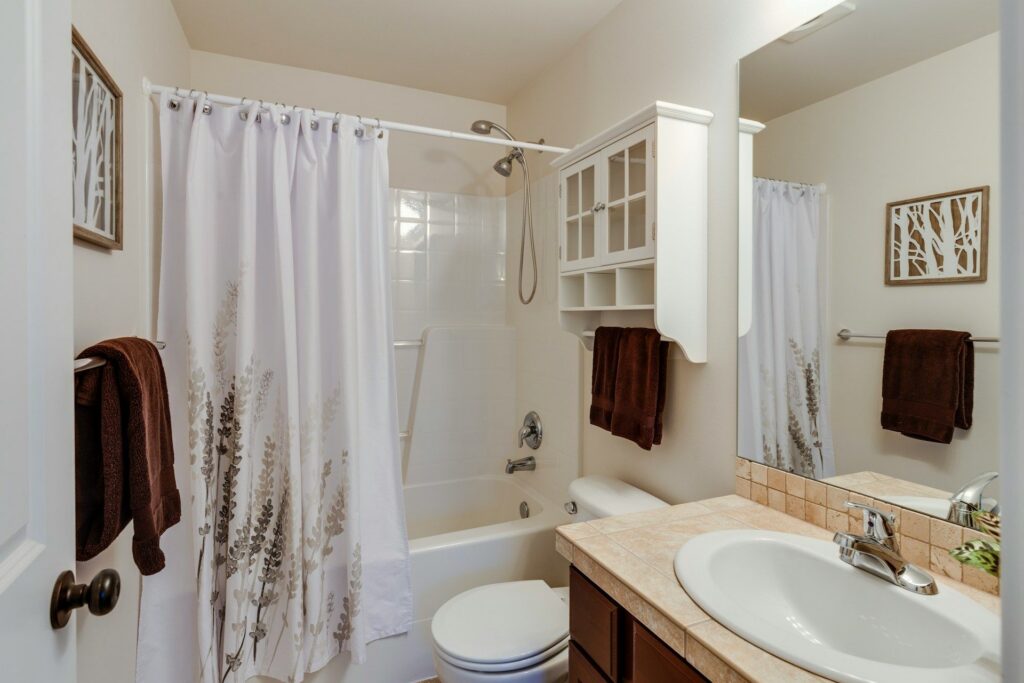
A shower curtain is probably the easiest alternative to a glass shower door. It is inexpensive, simple to install, and comes in just about every color, pattern, and material you can imagine.
For a standard bathtub-shower combination, a curtain can work perfectly well. You just need a shower rod, curtain, and liner. If the curtain gets stained or you decide to change the bathroom’s style, replacing it is easy and relatively inexpensive.
Shower curtains also give you more privacy than clear glass.
That’s especially useful in shared bathrooms, guest bathrooms, or homes where multiple people may be using the space at the same time.
The downside is that curtains can sometimes cling to your body while you’re showering. They can also develop mildew if they stay damp for long periods.
A washable fabric curtain paired with a water-resistant liner can make maintenance easier.
Also Read: Shower Glass Replacement Cost
#2. Frosted Acrylic Panels
Frosted acrylic panels can give you some of the clean appearance associated with glass while being lighter and generally easier to handle.
The frosted surface also provides additional privacy, which is a nice bonus in a shared bathroom.
Acrylic is available in different colors, textures, and levels of opacity, so you aren’t limited to one particular look. You can use it as part of a shower enclosure or as a fixed partition between the shower and the rest of the bathroom.
Another benefit is that acrylic is less likely to shatter than traditional glass.
That can make it appealing for households with young children or anyone who wants to avoid having a large glass panel in the bathroom.
It isn’t completely maintenance-free, though.
Acrylic can scratch more easily than glass, so you’ll want to use appropriate cleaning products and a soft cloth.
#3. Polycarbonate Shower Panels
Polycarbonate is another lightweight material that is a good alternative to shower glass.
It is known for being impact-resistant, so it can handle plenty of everyday abuse without being as vulnerable as conventional glass.
This can be especially useful in a busy family bathroom.
Polycarbonate panels can also come in clear, frosted, tinted, and textured finishes. A textured or frosted version can provide more privacy while still allowing light to move through the shower area.
The material is lightweight, which can make installation easier than working with large, heavy glass panels. It also tends to have a more practical appearance than a luxury bathroom finish, so the final look depends heavily on the style and quality of the panels you choose.
Also Read: Types Of Shower Glass
For a bathroom where toughness matters more than having a high-end glass look, polycarbonate can be a smart alternative.
#4. Half Wall Shower Partition
A half wall shower partition is another alternative to glass shower doors where a partial wall separates the shower from the rest of the bathroom.
The wall can be finished with the same tile used inside the shower, creating a cohesive look. You can also use a contrasting tile to make the partition stand out as a design feature.
One of the biggest benefits is privacy.
A properly positioned half wall can block the direct view into the shower while still keeping the bathroom feeling open.
It can also provide a convenient ledge for bottles, soap, or decorative items, although you should make sure the surface is properly waterproofed and sloped so water doesn’t sit on it.
The catch is that this is a more permanent solution.
You can’t simply remove it like a shower curtain. The layout also needs to be planned carefully because the wall has to contain water effectively while still allowing comfortable access to the shower.
#5. Glass Block Wall
A glass block wall can provide many of the benefits of a solid shower partition while still allowing natural or artificial light to pass through. The blocks are translucent, so they let light into the shower without giving you a completely clear view.

They’re also a permanent option, which makes them quite different from curtains or lightweight panels. Once installed, the wall becomes part of the bathroom itself.
Glass blocks can work particularly well with:
- Vintage
- Retro
- Slightly more traditional bathroom designs
They can also be used to create curved shower walls, although that type of installation can be more involved.
Also Read: Can You Paint Shower Door Frames?
The biggest drawback is that glass block construction takes more planning and labor than hanging a curtain. You also need to make sure the wall is properly waterproofed and structurally sound.
If you’re looking for something that feels more architectural than a basic shower enclosure, a glass block wall can make a strong statement.
#6. Waterproof Vinyl Or PVC Folding Door
A waterproof vinyl or PVC folding door can also be a good glass shower door alternative.
Instead of swinging outward or sliding across a large opening, the door folds or collapses toward one side. That makes it useful when floor space is tight.
PVC and vinyl are also naturally suited to wet environments. They can be wiped down relatively easily, and many folding doors are designed specifically for bathrooms and shower areas.
The appearance is usually more utilitarian than luxurious, so this may not be the first choice for someone creating a high-end spa bathroom.
But if your priority is saving space and keeping costs reasonable, it can get the job done.
It’s also a good option for smaller bathrooms where installing a conventional shower door would make the room feel cramped.
#7. Sliding Barn-Style Shower Screen
A sliding barn-style shower screen is another glass shower door substitute.
These systems are usually mounted on a visible track, creating the same general appearance as a barn door..
One big advantage is the sliding design. You don’t need to leave extra floor space for a door to swing open. That can be helpful in smaller bathrooms where every inch matters.
Still, if you want something more substantial than a curtain but don’t want a standard glass shower door, this can be an interesting middle ground.
Quick Comparison
Here’s a quick look at how these alternatives compare:
| Alternative | Cost | Privacy | Maintenance | Best For |
| Shower curtains | Low | High | Low | Budget-friendly bathrooms |
| Sliding barn-style screen | Medium | Medium to high | Medium | Modern bathrooms |
| Frosted acrylic panels | Medium | High | Low | Privacy and easy maintenance |
| Polycarbonate panels | Medium | Medium to high | Low | Busy family bathrooms |
| Half wall partition | Medium to high | High | Low | Bathroom remodels |
| Glass block wall | Medium to high | High | Low | Permanent, decorative designs |
| Vinyl / PVC doors | Low to medium | High | Low | Small bathrooms |
Bottom Line
You don’t need a traditional glass shower door to create a functional and attractive bathroom.
A shower curtain can keep things simple and inexpensive, while acrylic, polycarbonate, and PVC give you more structured glass shower door alternatives.
The best choice comes down to your bathroom layout, budget, privacy needs, and the amount of maintenance you’re willing to handle.
If you’re already planning a bathroom remodel, it’s worth looking at these options before automatically defaulting to a glass shower door.