


Shower Door Weep Holes (Complete Guide)
Shower door weep holes are one of those tiny details that almost nobody thinks about… until there’s a puddle on the bathroom floor.
Then suddenly, they become very important.
If you’ve ever noticed water sitting in the bottom track of your shower door or slowly creeping out onto the tile, there’s a good chance the weep holes are involved.
The good news is that they are easier to maintain once you know what’s going on.
In this post, we’ll go over everything you need to know about shower door weep holes.
What Are Shower Door Weep Holes?
If you take a close look at the metal track sitting on your shower curb, you’ll likely spot a few small, rectangular or circular slots cut into the aluminum.
These are your weep holes.
They aren’t mistakes or manufacturing defects; they are intentionally designed escape routes for water that hitches a ride inside the frame.
When you’re showering, water naturally sprays against the glass and runs down into the tracks or behind the metal housing of the door. Without an exit strategy, that water would just sit there forever, or worse, find its own way out – usually onto your expensive hardwood or tile flooring.
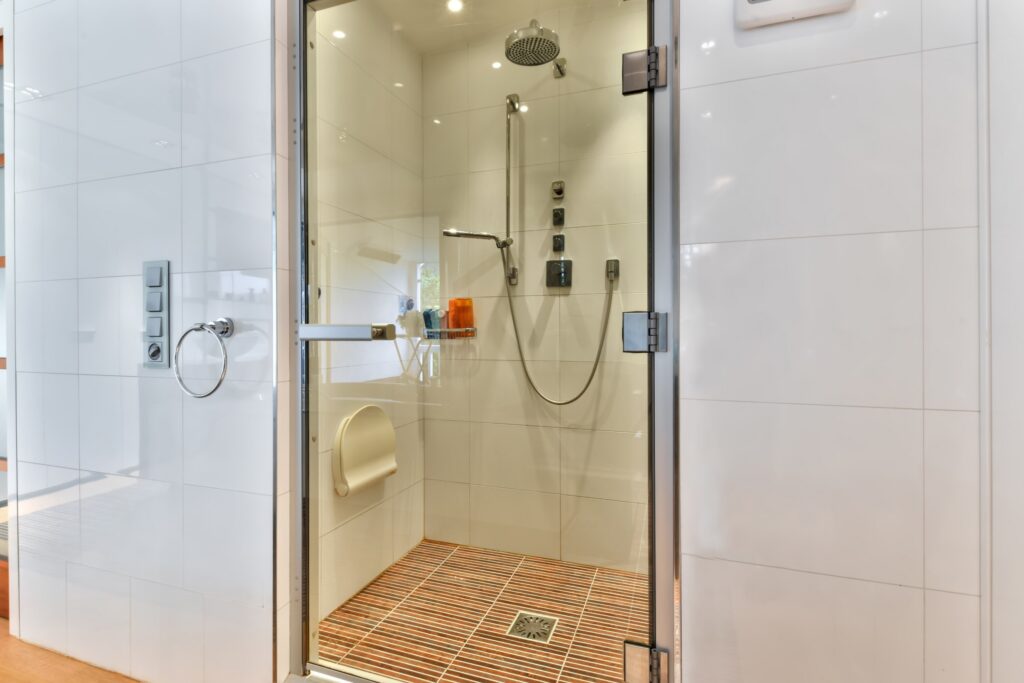
Weep holes take water that has “trespassed” into the internal parts of the door assembly and guide it safely back into the shower pan where it can go down the actual drain.
It’s a simple gravity-fed system that works perfectly as long as nothing gets in its way.
But because they are so small, they are incredibly easy to overlook until something goes wrong.
Also Read: How To Transport A Sliding Glass Door
Why Are Shower Door Weep Holes Important?
You might think a little bit of trapped water isn’t a big deal, but water is surprisingly destructive when it has nowhere to go.
Here’s what shower door weep holes are doing for you every day:
#1 Prevent Water From Spilling Outside
This is the big one. During a shower, water splashes everywhere, and some of it always ends up in the door track. That’s completely normal.
Weep holes make sure that water drains back inside instead of building up and spilling over.
Once they’re blocked, though, the water has nowhere to go. It starts rising in the track, and eventually, it finds its way onto your bathroom floor.
That’s usually when people start wondering what went wrong.
#2 Reduce Mold And Mildew Buildup
We all know that mold loves three things: darkness, warmth, and moisture. The inside of a metal shower track is a great place for spores.
If water sits in those tracks for days because the drainage is blocked, it starts to get slimy.
Before you know it, you’ve got black mold or pink mildew creeping out from under the metal.
This can actually smell pretty funky and isn’t great for your lungs.
Functional weep holes ensure that the track dries out between uses, which makes life a lot harder for mold to move in and start a family.
#3 Stop Stagnant Water
There is something inherently gross about “old” water sitting in a hidden spot.
Stagnant water becomes a breeding ground for bacteria and can even attract tiny drain flies if it stays long enough. Plus, as the water sits there, the minerals in it start to settle and harden.
This creates a crusty buildup known as limescale, which eventually acts like concrete, sealing the gaps even tighter.
By keeping the water moving, you prevent that “pond effect” from happening inside your hardware, ensuring that everything stays as fresh as possible in a room meant for getting clean.
#4 Protect Surrounding Areas
If water is constantly escaping the shower because the weep holes are clogged, it’s not just your tile that’s at risk. It can seep into the baseboards, get under the flooring, or even rot out the subfloor if you have a wooden structure.
Over time, this leads to soft spots in the floor or peeling paint on the walls nearby.
Replacing a rotted subfloor takes a weekend and a few thousand dollars!
Also Read: Shower Glass Care
What Happens When They Get Blocked?
Weep holes can get clogged with all sorts of everyday stuff – soap scum, hard water buildup, bits of hair, and general grime.

It doesn’t happen overnight, but over time, those tiny openings can get completely blocked.
Once that happens, the drainage system basically stops working. Water collects in the track, sits there, and slowly builds up with nowhere to go.
At first, it might not seem like a big deal. A little water in the track doesn’t look too serious.
But give it some time, and you’ll start noticing bigger issues like leaks, odors, and buildup that’s harder to clean.
Signs Your Shower Door Weep Holes Are Clogged
You don’t need to take your shower door apart to figure this out. The signs are usually pretty obvious once you know what to look for:
- Water sitting in the bottom track long after a shower
- Small leaks or puddles outside the shower area
- A musty or stale smell near the door
- Visible gunk, soap scum, or buildup in the track
If you’re seeing one or more of these, clogged weep holes are a strong possibility.
How To Clean Shower Door Weep Holes
The nice thing here is that cleaning weep holes is quick and doesn’t require any fancy tools.
You can usually handle it in just a few minutes!
Start by taking a close look at the bottom track and locating the holes. Then, use something like a toothpick, paperclip, or a small cleaning brush to gently clear out any debris.
Also Read: Top 5 Shower Door Trends
After that, flush the area with warm water. This helps wash away anything you’ve just loosened.
If there’s still some stubborn residue, a simple mix of vinegar and warm water can help break it down. Let it sit for a few minutes, then rinse again.
Finish by wiping down the track with a cloth or sponge. That last step helps remove any leftover grime and keeps things looking clean.
Do it regularly, and you’ll rarely run into problems.
Can You Add Or Fix Weep Holes?
In most cases, your shower door already has weep holes built in, and they just need a bit of maintenance.
If the holes are damaged, blocked beyond cleaning, or just not doing their job, you might be able to fix the issue with a thorough cleaning or by clearing the path more effectively.
Adding new weep holes is a bit trickier. It involves drilling into the frame, which isn’t always recommended unless you’re confident in what you’re doing.
Done incorrectly, it can damage the door or create new leak paths.
If you feel like your shower door has a design issue rather than just a clog, it might be worth getting a professional to take a look.
Bottom Line
Shower door weep holes are small, easy to overlook, and surprisingly important. They quietly handle water drainage every day, helping prevent leaks, odors, and long-term damage.
The best part is that they don’t need much attention.
A quick check and occasional cleaning are usually enough to keep everything working smoothly.
If you’ve been dealing with water in your shower track or unexplained puddles on the floor, this is one of the first things to check. Chances are, those tiny holes just need a little help getting back to doing their job.


